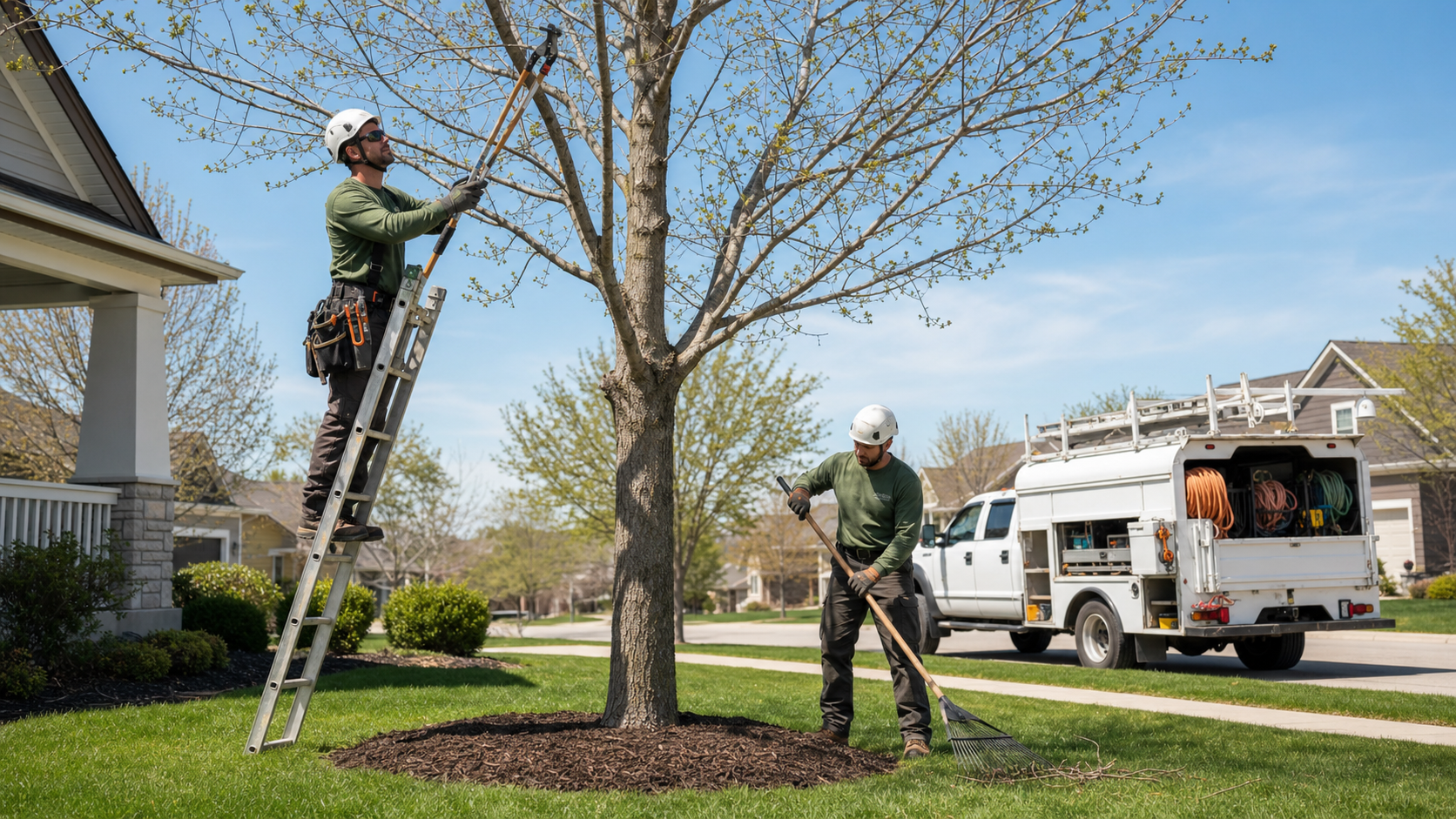
Late winter is one of the best times to start preparing your trees for the season ahead. In Sioux City, the last rounds of snow and frozen ground can leave behind stress that trees have to recover from. And with spring just around the corner, it’s a good time to step outside and take a closer look.
Good tree care in Sioux City starts early. When we wait too long, fast-warming weather can bring problems quicker than expected. Trees that were damaged by ice or stressed by deep cold need attention before they shift into growth mode. A few simple steps now can save a lot of yard headaches later and help trees get the healthy start they need.
Check for Winter Damage
The first thing we like to do in early March is walk the yard and check for damage from winter storms. Ice buildup, heavy snow, and extreme cold can hit trees hard, especially younger ones.
- Look for broken or hanging branches and trim if possible
- Check the trunk for any cracks or splits in the bark
- Spot any trees that are suddenly leaning or uprooted
- Remove snow piled at the base to keep it from freezing roots
Damaged limbs left in place can split more as the tree grows. Cracked bark can allow pests or disease to get inside. And soggy snow near the soil line can rot shallow roots if it sticks around too long. Getting ahead now means fewer surprises later. Checking after each cold snap can help you catch new issues and act fast to protect your trees as the season changes.
Prune Dead or Weak Branches
Before new buds form, pruning is easier and less stressful on the tree. Late winter is a calm, resting period for most trees. That makes it a strong time for cleanup cuts.
- Trim back dead and broken branches while it’s still cold
- Cut out limbs that rub or cross one another
- Take extra care on young trees where shape matters long-term
- Avoid topping or heavy pruning during this stage
We never recommend topping trees or removing large limbs without the right tools and know-how. If the branches are too high or thick, it’s worth getting help. Good pruning helps control shape, stops disease from spreading, and encourages stronger growth once spring arrives. By removing weak spots now, you also prevent those limbs from falling in windy April weather or when heavy rains start. Whether your tree is young or mature, careful pruning sets the stage for a strong structure as growth returns.
Sioux City Tree Co. provides expert pruning and storm damage cleanup with a safety-first approach that ensures proper development and recovery for all tree types.
Rake and Clear Around the Base
Once snow starts melting, yard debris becomes easier to see. That includes leaves pressed flat over the winter and any mulch that’s gotten packed down.
- Clear away dead leaves, twigs, and leftover fruit from the fall
- Make room at the base of trunks so bark stays clean and dry
- Break up clumps of old mulch that sit too close to the trunk
- Wait to add fresh mulch until the soil thaws fully
Mulch that’s too thick, too early, or right up against the trunk can trap moisture where it’s not wanted. This creates a welcome spot for mold and some insects. Giving the soil a breath of fresh air before mulching again helps the roots settle as they wake up. Light raking also loosens compacted earth and lets new rainwater reach the tree’s feeder roots, which are just beginning to come alive under the surface. If you spot weeds or grass clumping near the trunk, clear them away so nothing competes with your trees as they start their spring growth.
Check Soil Conditions and Water When Needed
As the topsoil begins to soften, roots slowly start drawing in moisture again. Snowmelt usually helps, but some areas may stay dry depending on slopes and sun exposure.
- Test the soil a few inches down with a gloved hand or trowel
- If the soil is bone dry and crumbly, it might be time to water
- If the soil is overly wet and puddling, that could be a drainage issue
It doesn’t take much water to make a difference. But we’re careful not to soak frozen areas or water in cold snaps. Checking now helps spot trees that may have trouble holding moisture once growth kicks in. Tree roots need the right mix of water and air to stay healthy through the season ahead. Slowly adjusting your watering routine based on each area of the yard can prevent root suffocation or dry-out, creating a more even and reliable start for every tree. When rain is coming, monitor for pooled water and check if gutter runoff is steering too much moisture into the same space near trunks.
Plan Ahead for Pest Watch and Fertilization
With warmer weather on the way, now is when we start thinking about what’s next. Pests start to wake up when soil temps rise, and trees begin taking in nutrients again once their roots fully thaw.
- Watch for early signs of insect damage like bore holes or sawdust
- Mark trees that struggled last year and may need fertilizer support
- Take notes on any missed fall tasks to add to your spring checklist
Fertilizing too early isn’t always helpful, especially when the ground is still firm with frost. But planning for it helps make the timing right later on. Identifying bugs early helps stop damage before leaves and flowers appear. Keeping a list of what each tree might need is a good habit as the season unfolds. Try to schedule a check-in for each tree just before bud-break, watching for small pests or discolored bark that weren’t visible earlier. When you know which trees were slow starters last year, it makes it easier to match the right fertilizer or care as soon as growth begins.
Our team uses professional equipment and local expertise to diagnose pest threats and recommend the right care for healthier, more resilient trees through every Midwest season.
Give Your Trees a Strong Start
Getting trees ready for spring doesn’t take much time, but it does take some care and timing. When we trim weak limbs, rake clear the base, and help roots settle in dry or soggy spots, we put the tree in a better position for spring growth.
Most of us live with the trees we have for years, so paying attention now brings long-term gains. Starting with healthy trunks, stable roots, and cleared-out soil gives trees in Sioux City the best shot to leaf out strong and full this spring. Spring brings enough to stay busy, fixing winter’s effects early on makes that stretch smoother for everyone.
Noticing damaged limbs, dry soil, or bark cracks as winter ends can be an early sign your trees need attention before spring arrives. We understand the importance of strong roots and healthy growth zones for your landscape’s success. For expert pruning, soil assessments, or reliable advice on tree care in Sioux City, Sioux City Tree Co. is ready to help. Call us today to schedule your service.
Frequently Asked Questions
When should I start prepping my trees for spring in Sioux City?
Late winter, often in early March, is a great time to start because trees are still dormant and easier to inspect. Addressing issues before warm weather arrives helps prevent small problems from turning into bigger spring damage.
How do I check my trees for winter damage after snow and ice?
Walk your yard and look for broken or hanging branches, cracks or splits in the trunk, and any trees that are leaning. Clear heavy snow piled at the base so it does not sit and freeze around shallow roots.
What is the best way to prune trees before spring buds form?
Trim dead, broken, and weak branches while the tree is still in its resting period, and remove limbs that rub or cross each other. Avoid topping or removing large limbs without the right tools, since improper cuts can harm the tree.
What is the difference between topping a tree and proper pruning?
Topping removes large sections of the canopy and can stress the tree and lead to weak regrowth. Proper pruning focuses on removing dead or problem branches with clean cuts to improve structure and reduce future breakage.
How can I tell if my tree needs water in late winter or early spring?
Check the soil a few inches down with a gloved hand or trowel. If it is dry and crumbly, a light watering may help, but if the ground is overly wet or puddling, the issue may be drainage rather than lack of water.