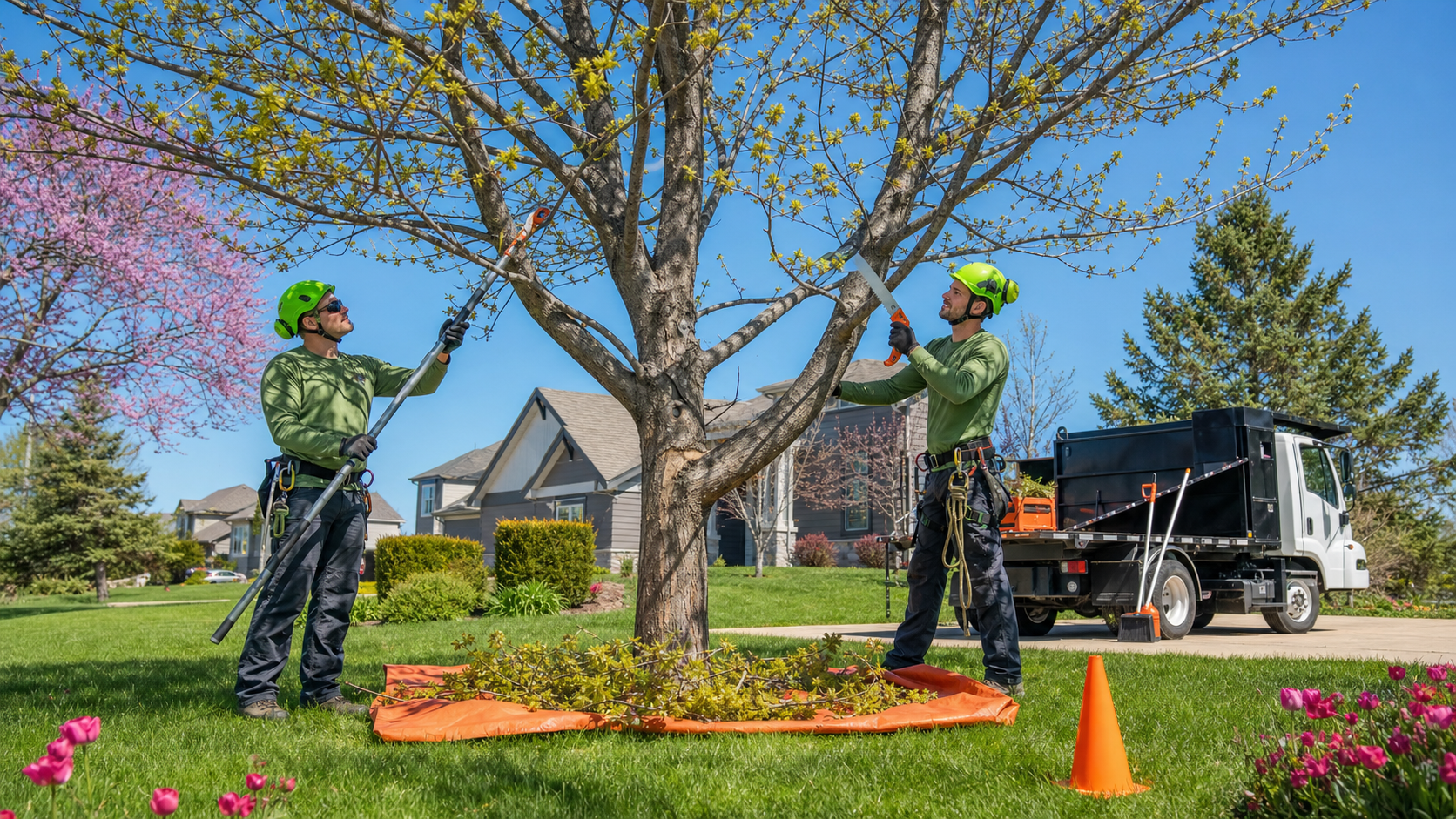
Give Your Sioux City Trees a Safe Spring Refresh
Spring is when trees wake up, but it is also when winter damage starts to show. Before leaves fill in and storms roll through, it helps to take a good look at how your trees are shaped. A little smart trimming at the right time can prevent broken limbs, clean up the look of your yard, and support healthier growth all season.
Late winter into early spring is a great window for tree shaping in Sioux City. Branches are easier to see without thick foliage, and cuts made during this period often close over more quickly as the tree starts growing. Thoughtful shaping improves safety, curb appeal, and long-term structure. As a local tree care team, we understand Siouxland soil, wind, and weather, and we know how easy it is for DIY efforts to go wrong, especially when ladders and chainsaws are involved.
Why Spring Tree Shaping Matters in Sioux City
Our winters can be hard on trees. Repeated freeze and thaw, heavy snow, and strong winds can leave branches cracked, bent, or barely hanging on. You might not notice all that damage at first, but once spring storms start, those weak spots can turn into broken limbs in your yard.
Thoughtful spring tree shaping helps by:
- Removing winter-damaged or broken wood before it falls
- Lightening heavy sections of the canopy so branches flex better in the wind
- Guiding new growth so the tree is more balanced and sturdy
When trees are shaped with care in spring, they often stand up better to thunderstorms and high winds that arrive later. Safer trees mean less risk of limbs landing on:
- Driveways and parked vehicles
- Sidewalks and walkways where people pass
- Roofs, gutters, or decks
There is also a big health benefit. Shaping during the right spring window can:
- Open the canopy for better airflow, which can reduce moisture problems
- Let more sunlight reach inner branches and the lawn below
- Help trees heal cuts more efficiently as they move into active growth
All this sets your trees up for a stronger, greener summer with fewer surprise issues.
Safety-First Tree Shaping Tips for Homeowners
Many homeowners like to handle small tree tasks on their own, and there are a few situations where light work can be done with care. But tree shaping is not the same as clipping a hedge. Once you get into larger cuts, height, or power lines, it becomes dangerous very quickly.
As a general guide, it is safer for homeowners to limit their own work to:
- Very small branches that you can reach from the ground with a hand tool
- Low limbs that are easy to handle and not under heavy tension
- Simple cleanup of small twigs and suckers close to the trunk
Anything involving power lines, rooftops, or large limbs should be left to trained crews with the right equipment.
If you do any light work yourself, basic safety steps matter:
- Use a stable ladder on firm, level ground, with a helper if possible
- Keep children and pets well away from the work area
- Use sharp, clean tools so you make smooth cuts instead of tears
- Never work from a wet roof, on ice, or from the top steps of a ladder
We also see common DIY mistakes that cause long-term problems:
- Topping trees by cutting off the whole top, which weakens the tree
- Removing too much inner wood, leaving the tree bare and stressed
- Cutting big limbs from the wrong side so they tear down the trunk
- Misreading a branch as healthy when it is actually decayed inside
These issues can make a tree more likely to fail in a storm and can shorten its life.
How Pros Shape Trees for Health and Curb Appeal
Professional crews follow a plan, not just a pair of clippers. When we work on tree shaping in Sioux City, we focus on both safety and how the tree will look for years, not just this spring.
Common techniques include:
- Crown cleaning, removing dead, broken, or diseased branches
- Crown thinning, carefully taking out select limbs to let in light and air
- Crown raising, lifting the lowest branches for clearance over walks and drives
- Structural pruning, guiding how main branches grow so the tree is better balanced
During an assessment, we look at things like branch angles, how weight is distributed, and where branches might cross or rub. Different species common in the area’s neighborhoods, such as shade trees and ornamental trees, can need different approaches. What is right for a fast-growing maple will not be the same as what works best for a slower, heavier oak.
Professional crews bring more than just knowledge. They bring:
- Trained climbers who know how to move safely through the canopy
- Commercial-grade saws, rigging gear, and protective equipment
- Techniques to lower heavy limbs gently instead of letting them crash
- Full cleanup so branches, sawdust, and debris are removed from your yard
That care helps protect grass, flower beds, fences, and other landscaping while the work is done.
Spotting Trees That Need Spring Attention
Not every tree needs shaping every year, but a quick spring check can tell you which ones should be looked at more closely. You do not need special training to spot a few warning signs.
Watch for:
- Cracked, split, or hanging branches
- Limbs touching or scraping roofs, gutters, or siding
- Branches that block sidewalks, driveways, or views at corners
- Trees that started leaning after a winter storm or soft ground
Health clues can show up early in the season too:
- Deadwood that stays bare while the rest of the tree buds out
- Bark that is peeling away in large sections
- Fungal growth, mushrooms, or odd swelling on the trunk or roots
- Very sparse budding compared to what you saw in past springs
A simple habit helps: once a year, as winter wraps up, walk your property and look at each tree from different angles. Make a short checklist of anything that looks off, then consider whether professional shaping or a careful inspection would be a good idea.
Preparing Your Yard for a Safe Tree Service Visit
If you decide to bring in a crew, a little prep work can make the day smoother and safer for everyone. It also helps protect your belongings while large limbs and equipment move through the space.
Before the visit, try to:
- Move vehicles away from work zones and under any trees being trimmed
- Clear lawn furniture, grills, toys, and yard decor from the area
- Shift kids play equipment if it sits under or next to the trees
It also helps to mark or point out anything hidden that might be at risk, such as:
- Sprinkler heads and shallow irrigation lines
- Invisible dog fences and buried cables close to the surface
- Garden beds or new plantings you want crews to avoid
Keeping pets indoors or in a secure space while work is going on keeps them safe and lets the crew focus on careful shaping and removal. With access cleared and hazards marked, the job often goes faster and with less disruption to your yard.
Schedule Your Spring Tree Shaping Before Storm Season Hits
Once warmer weather settles in, storms and high winds are not far behind. Trees that looked fine during winter can show their weak spots during the first big blow. Taking care of shaping and safety concerns early in the season reduces the chance of emergency calls, fallen limbs, and damage to roofs or vehicles.
Proactive work also keeps your yard looking clean and cared for when everything leafs out. A tree that has been thoughtfully shaped will often have a more natural form, better light flow, and fewer random, awkward branches sticking out. At Sioux City Tree Co., we focus on practical, safe, and long-lasting tree care so your property can be attractive, healthy, and better prepared for whatever the weather brings.
Transform Your Trees Into Long-Lasting Assets
If you are ready to guide your landscape into a healthier, more beautiful future, our team at Sioux City Tree Co. is here to help. Whether you need expert tree shaping in Sioux City or want advice on the best approach for your property, we will walk you through every step. Share your goals and photos of your yard and we will recommend a custom plan that fits your trees and budget. If you have questions or want to schedule a visit, contact us today.